

The success of any strategy comes down to people, and the actions they need to take. Here are five key steps to identify and embed habits that drive organisational change....
What’s the biggest factor in making change projects more likely to succeed?
Typically, when organisations are implementing a strategy, the focus is on systems, budgets, resources, deadlines and KPIs. Too often there’s a lack of thinking deeply enough about the humans involved.
But the success of any strategy comes down to people, and the actions they need to take.
A behavioural lens
Human attitudes to change are complex. We aren’t perfectly rational decision-makers. We forget things. We’re influenced by context, emotions, and social norms. We take shortcuts. We resist change.
The complex, rational part of our brains (the ‘System 2’ in Daniel Kahneman’s seminal Thinking, Fast and Slow) takes a while to adjust to new ways of doing things – both emotionally and behaviourally. The change can feel daunting and difficult.
Most organisations have a knee-jerk response to getting people to do something new. They roll out training programmes or new policies as the answer. But these approaches assume that knowledge equals action.
Make it smaller, make it a habit
In fact it’s much easier to start small, identify the key actions people need to take, and help them build habits to make those actions as easy as possible to do. This is about influencing behaviour in the moment, not about sitting a training course once a year.
To embed lasting behaviour change, start by identifying key actions – the actions that make the biggest difference to the outcome. Ideally, focus on one simple action.
We need the desired action to become easy and automatic. To become habitual.
But how to build a habit? Take an example from everyday life. You might have the intention to drink more water, and you know it would be healthier to be hydrated, but you forget to do it. Finding simple ways to prompt the action during your daily routine makes the difference – maybe have a glass of water with meals, or buy a nice new water bottle that you keep topped up on your desk. The vague notion of drinking more becomes easier when you translate it into the actions that can build a habit.
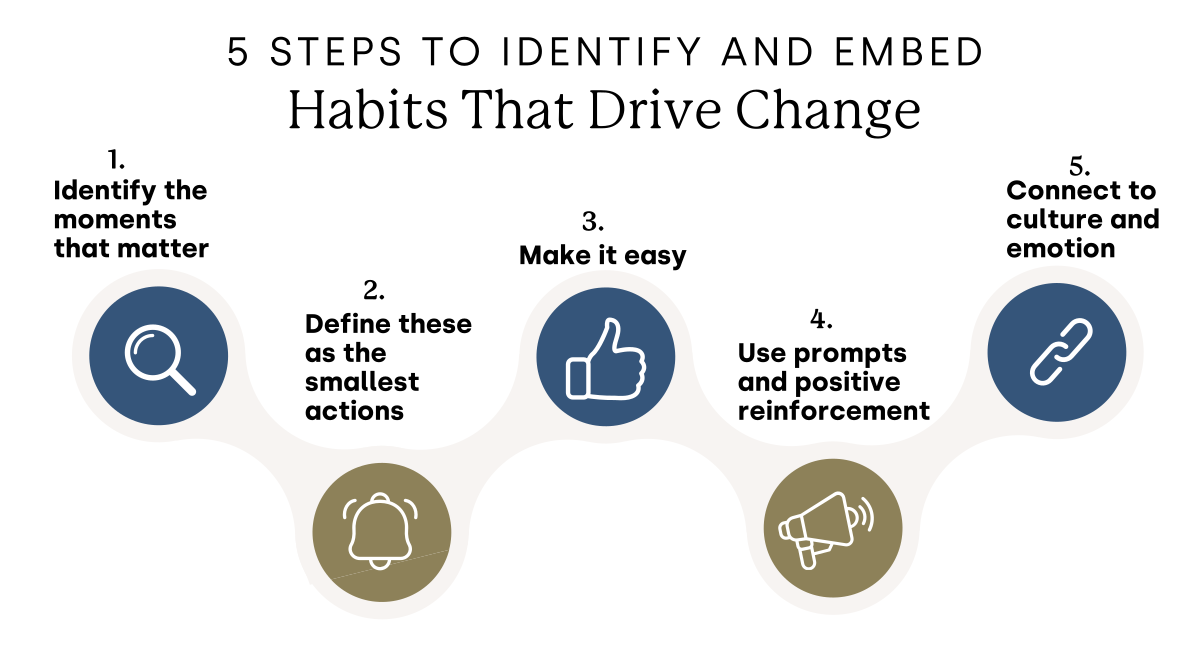
Five key steps to identify and embed habits that drive organisational change…
- Identify moments that matter
Find the moments when people take an action that makes the biggest difference to the outcomes you’re trying to achieve. - Define these as the smallest actions
Think about what people are actually doing in those moments, and how to focus on pinpointing a specific action. Check out this article for some examples, and to understand the important difference between skills and actions/behaviours.
These are the actions we want to turn into habits. - Make it easy
Reduce friction. Pair the habit with existing routines. - Use prompts and positive reinforcement
Nudges work best when they’re timely, visible, and feel helpful. Refer to the EAST framework from BIT (Easy, Attractive, Social, Timely). - Connect to culture and emotion
Link habits to what people care about. To raise awareness and engagement, create a campaign and use humour, surprise, or storytelling to cut through the noise.
Habits in practice: An example from Channel 4
We worked with Channel 4 to launch a new Code of Conduct. Rather than asking employees to memorise every rule, we focused on one simple habit: ask yourself, “Is it OK?” before making a decision.
The campaign captures Channel 4’s core values and uses them to promote the exemplary professional practice that underpins cutting-edge broadcasting. 'Is it ok?’ was inspired by Channel 4’s ground-breaking show, The Last Leg.
The result? An award-winning campaign that cut through the noise and made compliance feel human.

Speak to the Human
To explore these ideas further and think about how they apply to you, listen to our episode of the ‘Speak to the Human’ podcast with Acteon partner Owen Rose.
Owen and Sarah discuss a ‘human-centred’ approach – why it matters, what it means, and how to do it well.
