
30/10/26
Deloitte surveyed 25,000 UK workers about AI. Here’s what we can learn, and what to do next.


Deloitte GenAI Workforce Survey
In a recent large-scale study, Deloitte asked 25,000 UK workers across 22 industries about their use and views of GenAI. The findings offer a revealing picture of how people are actually using the technology at work, and where organisations are struggling to keep up.
The report outlines common themes around productivity, shadow AI and leadership, with one key challenge for organisations: “technology investment alone does not create value.”
So what does create value? And what should organisations be doing differently?
AI adoption isn’t the same as AI impact
“Widespread but shallow” is how the report explains AI use across participants. Most respondents say they are using AI for easy tasks like drafting emails and summarising documents, rather than rethinking their work or working methods.
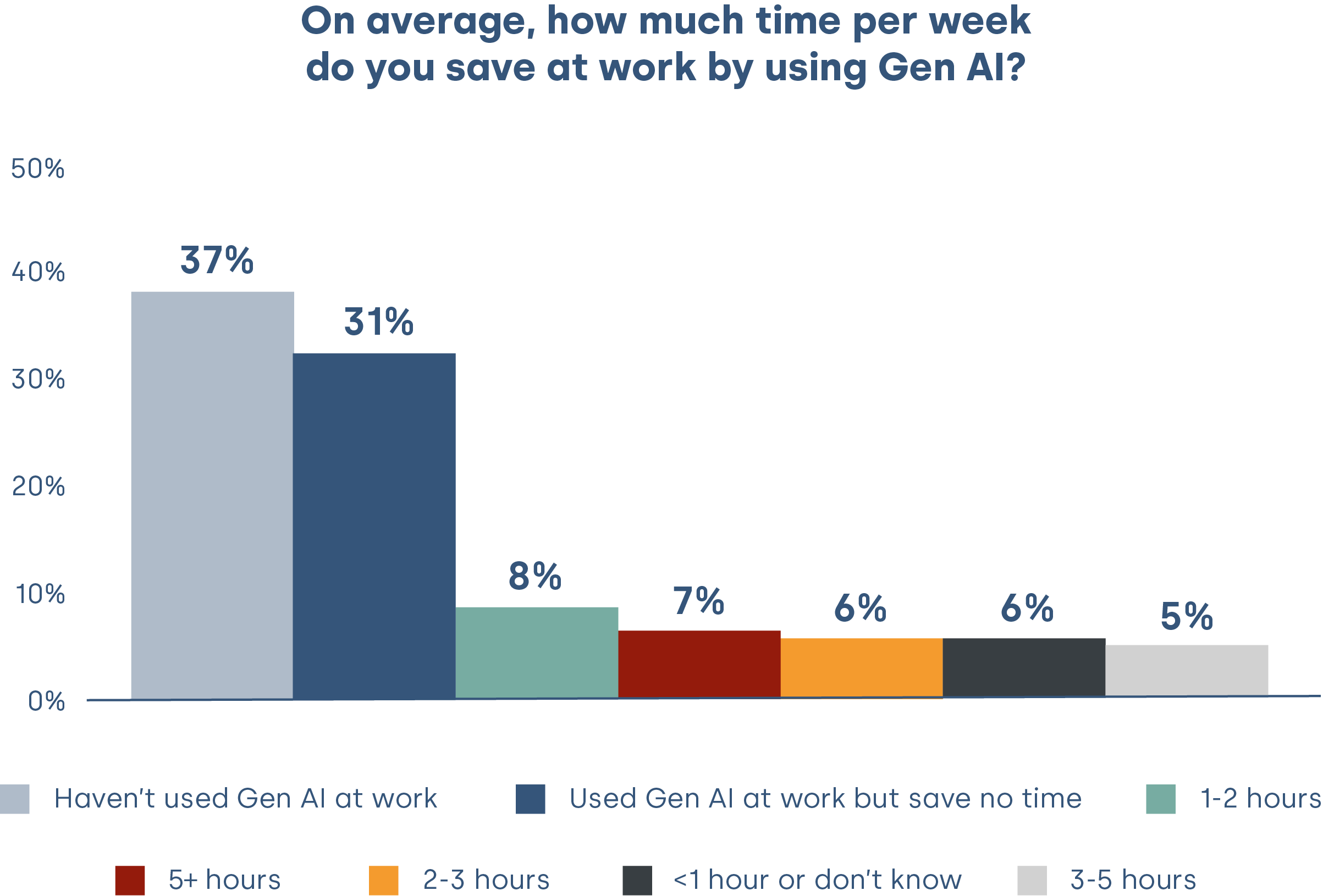
While some (12%) report meaningful time saving, a third of people who do use Gen AI at work are not seeing any time saved from using AI. There is clearly a gulf between how much people are using AI to support their work, and how much it is adding value to that work.
Training is falling behind
Training hasn’t kept up the pace of adoption 50% of users have received no AI training at all. This is despite irresponsible use being one of the biggest risks to companies with the enormous possibilities of data and ethics breaches that using AI can lead to.
Employees aren’t hearing enough from leaders
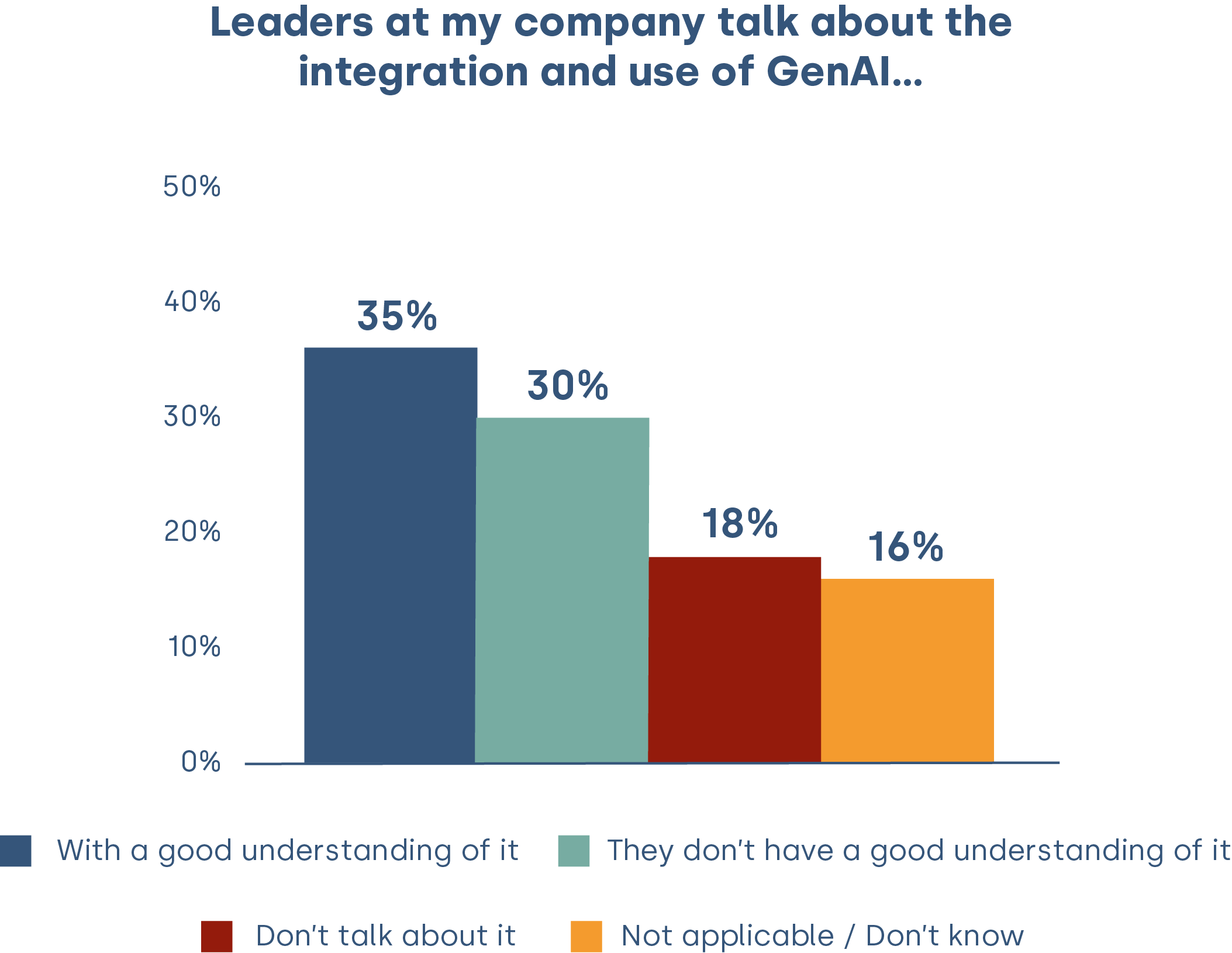
30% of users say they don’t hear their leaders talking about AI with confidence, and another 18% say they don’t hear leaders talk about it at all. Only a small number (28%) say their organisation has a clear AI policy. With so little leadership in this area, individuals are taking AI usage into their own hands.
Shadow AI is rife
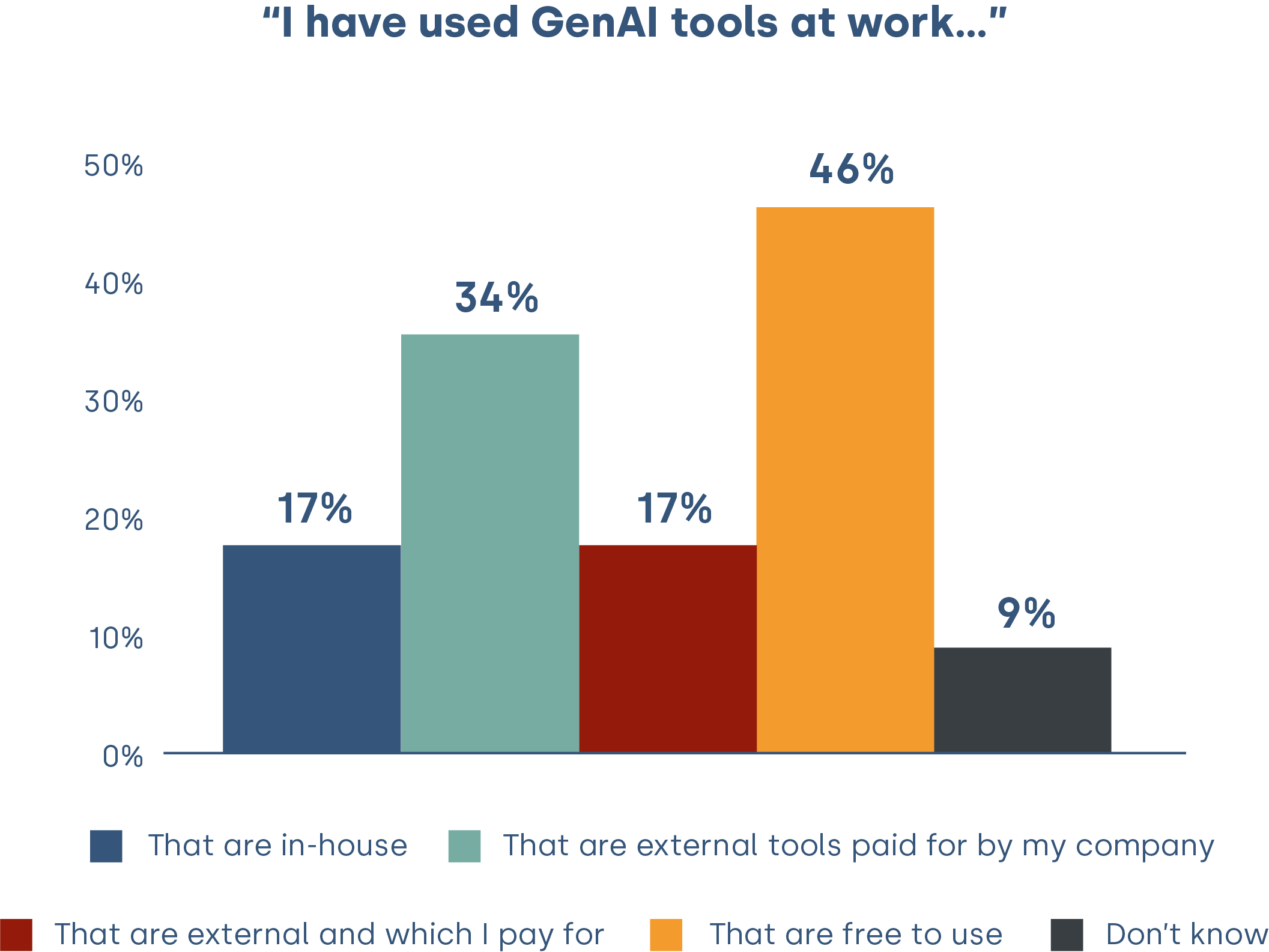
People aren’t waiting to be told what they’re allowed to do. The report found that 1 in 3 GenAI users do so without their employer’s knowledge or permission. Some of these (17% of AI users) are paying for their own AI tools. When a gap emerges between an organisation’s AI policy and the reality of how people use it, that organisation becomes vulnerable to significant data leaks.
What can organisations do to close these gaps?
People are using AI, but often without the training, guidance or leadership they need to use it well. Here are six practical ways to close those gaps.
Make guidance easy to find and follow
Right now, most people don't know where to find AI policy or guidance. You want your employees to be clear about your AI policy, know where to find it, and know what it means for their work in practice.
If you want to increase attention to ethical AI use at work, make the content simple, clear, and concrete and then run a campaign that makes the policy easy to find. Having the rules is no good if no one knows where to find them or how to put them into action.
This is how leaders can encourage the adoption of AI at work using insights from behavioural science.
Effective training
The Edelman barometer, an annual global survey that measures public trust, shows that organisations are no longer judged on performance alone, but on their broader role in society. Gaining trust means taking responsibility for educating, upskilling and supporting your staff. This includes AI.
More than half of respondents say training would encourage them to use AI more, meaning training could unlock wider and more responsible AI use. This isn’t just about showing people what tool to use and how to use it, but how to use it well – meaning both effectively and responsibly.
That’s the thinking behind our free AI training videos: five essential actions that help people use any AI tool safely, confidently and effectively at work.
Bring AI out of the shadows
It’s almost impossible to control shadow AI usage. The answer isn’t to bring in stricter ruling which will just send people into greater secrecy, but to address it directly and promote responsible AI use as an alternative. Make it clear what’s not allowed and why, explaining the possible impact to the company and your clients. Acknowledge the temptation to use it and make it clear that you’re navigating this changing landscape together.
Build your AI narrative
How you talk to your teams about AI makes a world of difference in what trust you gain and what openness you earn. Employees need to see confidence across an organisation to trust in their leadership. By creating a philosophy or narrative for the use and purpose and possibilities of AI, you can link policy to both company objectives and individual motivations. Bringing employee voice into the mix can be a huge boost to demonstrate you’re listening to your people.
This is why effective AI strategy is more about the people than the technology.
Identify quick wins
Most people just want to use AI to help them do their jobs, without worrying about how to transform what they do. Help them identify quick wins and gain confidence in their AI skills by building life and effective AI tools that drive impact.
Invest in people
Irresponsible AI use is about people more than technology. Employees need to be trained in what to use, how to use it, when it’s appropriate to use it or not, and how to make judgements for themselves about how they’re using it. When AI adoption is being pushed without effective training, support and discussion, vulnerabilities occur and mistakes are made. As the report states: “Unlocking GenAI's potential requires investment in people as well as technology.”
For compliance teams, human judgement matters even more. Here’s why AI won’t solve your compliance problems, and how to keep people genuinely in charge of decisions.
Ask for help
AI adoption is complex. Every organisation is having to find what feels right for them and their people, but the ones that get it right will have a more engaged and trusting workforce using AI in smarter, more responsible ways. The technology is moving quickly. Confident leadership, open discussion and practical training will make all the difference.
But you don’t need to have all the answers. At Acteon, we’ve been supporting businesses to navigate change and shift behaviour for four decades. With the rise of AI, we’ve created responsible AI toolkits, researched AI usage, partnered on an AI policy report with the Institute of Business Ethics, and are at the forefront of discussions with businesses about how to get their people to use AI well and what comms to use to achieve this. If you’d like to talk about how your business can support people with AI adoption, get in touch.